Insights
Insights
Practical guidance on proposals, invoicing, payment follow-up, and the finance operations that connect them.
Articles and insights
Why profitable service firms still wait too long for cash (opens in a new tab)
Accurate invoices can still leave a service firm waiting for cash when the delay starts earlier: a missing purchase order, an unapproved timesheet or a milestone finance never heard about. Learn how to trace one billable event from approval to payment, give each handoff an owner and review stuck work weekly.
3 min readRead article: Why profitable service firms still wait too long for cash, opens in a new tab
When QuickBooks is enough and when the surrounding process needs work (opens in a new tab)
Before buying another platform, check whether the problem is a setting you have not switched on or a handoff nobody owns. This guide separates what QuickBooks already handles from the work outside the ledger, and shows how to make any provider demonstrate the exceptions before you commit.
How to calculate the value of proposal to cash automation (opens in a new tab)
A business case falls apart when the same money is counted twice. Earlier payment releases working capital but is not a second sale, and saved hours only cut costs when a real expense goes away. Learn to separate the three sources of value and test the assumptions that matter.
3 min readRead article: How to calculate the value of proposal to cash automation, opens in a new tab
Build invoices your customer can approve the first time (opens in a new tab)
A correct invoice can still fail the customer's approval process because of the wrong legal entity, a missing purchase order or a vague description. Learn how to collect billing instructions before delivery starts, run a release check with evidence and measure acceptance instead of emails sent.
3 min readRead article: Build invoices your customer can approve the first time, opens in a new tab
Turn project milestones into controlled billing events (opens in a new tab)
A task marked complete does not always mean an invoice is ready. The contract may require acceptance, a deliverable or an approved timesheet. Learn how to define each milestone as a billing record, separate preparation from release and decide in advance how exceptions change the schedule.
3 min readRead article: Turn project milestones into controlled billing events, opens in a new tab
Stop approved scope changes from disappearing before billing (opens in a new tab)
Extra work often gets delivered and then forgotten commercially. Delivery remembers the request, finance sees only the original contract, and at month end nobody can say whether it was billed, authorized or given away. Learn how a change record preserves the decision and reconciles changes to invoices.
3 min readRead article: Stop approved scope changes from disappearing before billing, opens in a new tab
Build payment follow up around the reason for delay (opens in a new tab)
Another reminder rarely helps when an invoice sits in the wrong portal, the amount is disputed or the customer is short of cash. Learn how to check eligibility before every message, route replies by the real blocker and treat escalation as a deliberate decision rather than the next automatic step.
3 min readRead article: Build payment follow up around the reason for delay, opens in a new tab
Turn an aging report into a daily receivables work queue (opens in a new tab)
An aging report shows how long balances have been open, not what anyone should do about them today. Learn how to give each material exception a reason, an owner and a next action, prioritize by what can actually move, and stop rediscovering the same facts at every review.
3 min readRead article: Turn an aging report into a daily receivables work queue, opens in a new tab
Resolve invoice disputes without losing control of the balance (opens in a new tab)
When a customer says an invoice is wrong, generic reminders stop being useful. Learn how to capture the exact disputed amount, assign the decision to the right role, assemble an evidence pack before negotiating, and pause the right messages while keeping the undisputed balance and its history in view.
3 min readRead article: Resolve invoice disputes without losing control of the balance, opens in a new tab
Why payment received is not the end of the process (opens in a new tab)
Cash can arrive without anyone knowing which invoice it settles. Combined payments, deductions and net processor deposits all leave finance chasing paid invoices or overstating what is owed. Learn how to allocate receipts, explain gross versus net amounts and keep a small queue for payments that do not match.
3 min readRead article: Why payment received is not the end of the process, opens in a new tab
A month end receivables review that catches more than old invoices (opens in a new tab)
A month end review that only flags old invoices can miss unbilled work and balances that disagree with the ledger. Learn how to check completeness and cut off first, reconcile receivables detail to the accounts, review cash and corrections separately and finish with a review backed by evidence.
3 min readRead article: A month end receivables review that catches more than old invoices, opens in a new tab
The proposal to cash dashboard that explains what to fix (opens in a new tab)
A dashboard can show revenue, invoices and payments and still leave you unsure which delay to fix first. Learn how to define measures before drawing charts, read DSO in context, give every red number a drill down and avoid attractive totals that point your attention in the wrong direction.
3 min readRead article: The proposal to cash dashboard that explains what to fix, opens in a new tab
Decide which system owns each part of proposal to cash (opens in a new tab)
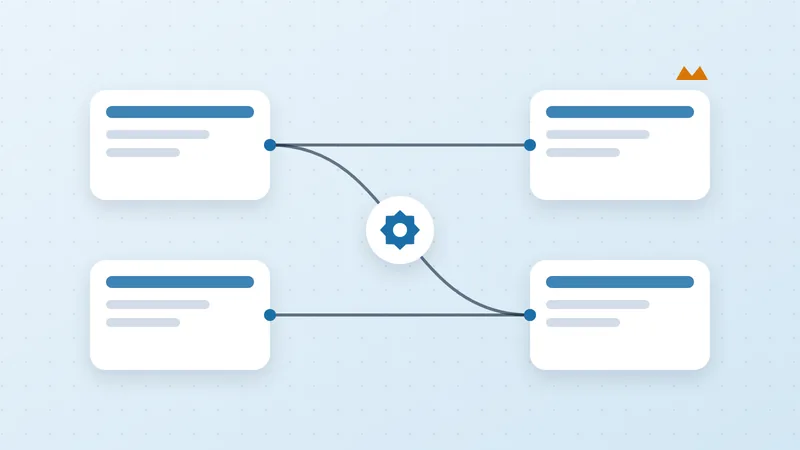
Connecting two systems does not settle which one is right when both allow edits to the same invoice. Learn how to assign authority for each record, use identifiers that survive name changes, separate financial state from workflow state and plan how the connection will be run after launch.
3 min readRead article: Decide which system owns each part of proposal to cash, opens in a new tab
Test the failures before trusting an invoicing integration (opens in a new tab)
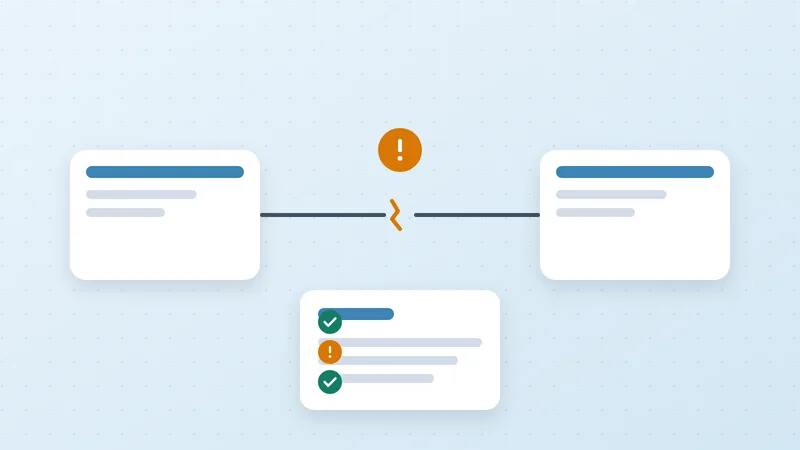
A successful demo proves one path worked once. It does not prove the integration will avoid duplicate invoices, stop reminders after payment or recover when a connection drops. Learn which failure tests to run, from repeated and reordered events to permission changes, and how to agree a release gate.
3 min readRead article: Test the failures before trusting an invoicing integration, opens in a new tab
Where AI can help receivables teams and where approval still matters (opens in a new tab)
The safest first use of AI in receivables is reading and organizing information, not changing financial records. Learn how to choose tasks with a verifiable answer, keep approval authority explicit, test the awkward customer messages and run a limited pilot with a fallback before relying on any output.
Your aging report cannot show an invoice that was never created (opens in a new tab)
A clean aging report can hide a weak billing process, because work that never became an invoice never shows up as overdue. The real test is whether every eligible portion of work reaches billing at all, and no reporting feature can confirm that on its own. Start by checking your milestones and delivery records.
1 min readRead insight: Your aging report cannot show an invoice that was never created, opens in a new tab
Do not count accelerated cash as new revenue (opens in a new tab)
If an invoice that would have been paid next month is paid this month, you have gained earlier access to cash, not a second sale. Treat collection timing as part of working capital, and judge any automation claim on that basis rather than as extra revenue.
1 min readRead insight: Do not count accelerated cash as new revenue, opens in a new tab
A sent invoice may still be waiting outside the approval process (opens in a new tab)
Sent only means your system attempted delivery. It does not prove the customer's accounts payable team accepted the invoice for processing. The gap between delivery and acceptance matters at any size, so study where your own invoices wait before borrowing anyone else's statistics.
1 min readRead insight: A sent invoice may still be waiting outside the approval process, opens in a new tab
A scope request is not the same as approval to bill (opens in a new tab)
A customer asking for an extra deliverable has expressed a need, not agreed a price, named an approver or set a payment date. Keep the request separate from an approved commercial change until those points are confirmed and recorded, and let accounting policy decide the treatment.
1 min readRead insight: A scope request is not the same as approval to bill, opens in a new tab
The best next action may be to stop the next reminder (opens in a new tab)
When a customer says the invoice was paid yesterday, disputes a line or cannot find the attachment, the next scheduled reminder is often the wrong move. Each reply should change what happens next. The control that matters is what your process does once the routine no longer fits the facts.
1 min readRead insight: The best next action may be to stop the next reminder, opens in a new tab
A reminder cannot repair a customer cash shortage (opens in a new tab)
Automation can deliver information and prompt action, but it cannot give a customer funds they do not have. Overdue balances driven by customer cash pressure need a different response, so classify the cause before deciding that more follow up is the answer.
1 min readRead insight: A reminder cannot repair a customer cash shortage, opens in a new tab
Lower receivables do not always mean more cash (opens in a new tab)
A falling receivables balance looks like faster collection, but part of the drop may be credits and write offs rather than cash. A simple worked example shows why cash received should be measured separately from every other movement in the receivables balance.
1 min readRead insight: Lower receivables do not always mean more cash, opens in a new tab
An improving average can hide your hardest unpaid invoices (opens in a new tab)
An average payment time calculated from paid invoices leaves out the invoices still unpaid, so it can improve while your oldest balances grow. Published averages are useful context, but you need your own view of open balances before concluding that performance is healthy.
1 min readRead insight: An improving average can hide your hardest unpaid invoices, opens in a new tab
A connected system still needs a reconciliation (opens in a new tab)
A connector can show a green status while one invoice quietly fails to transfer. Events can repeat or arrive out of order, so a successful connection proves little about complete records. A dependable integration still needs regular reconciliation.
1 min readRead insight: A connected system still needs a reconciliation, opens in a new tab
Use AI to prepare the case before letting it influence the decision (opens in a new tab)
An AI summary is only useful if it saves time without hiding the evidence behind it. Start with a constrained task, require source links, keep balances under the accounting system and have a person approve consequential messages and changes.

No matching articles. Try another search or clear your filters.
Industry news and research
Fourteen direct links with a short explanation of what each supports. The list mixes independent trade journalism, public-sector announcements and original research releases; the type is identified so a vendor press release is not mistaken for independent reporting. Dates are publication dates unless stated otherwise. Entries are ordered for editorial usefulness, not strictly by recency.
Most sources discuss late payment, billing friction or working capital rather than use the exact term proposal-to-cash. The connection to a wider proposal-to-cash process is Airan's editorial interpretation. Entry 14 is supplemental fraud context, not evidence of late-payment prevalence.
New Xero Data Shows US Small Businesses Face Mounting Pressure as Payment Delays Rise and Cost Shocks Loom (opens in a new tab)
Vendor data releaseXero reported a rise in average US payment time to 28.8 days and average lateness to 9.0 days in the March 2026 quarter. The deterioration followed earlier improvement.
Related: The proposal to cash dashboard that explains what to fix (opens in a new tab)
Finance and sales teams do not match up on criteria for deal approvals (opens in a new tab)
Independent trade journalism about vendor researchCFO.com reports differences between sales and finance leaders in assessing deals and customers with late-payment histories. The article draws on a Creditsafe survey.
Related: Why profitable service firms still wait too long for cash (opens in a new tab)
Time to Pay Up Government unveils toughest crackdown on late payments in over 25 years (opens in a new tab)
Government policy newsThe UK government announced planned changes to late-payment enforcement and dispute handling in March 2026, citing an estimated £11 billion annual economic cost.
Related: Resolve invoice disputes without losing control of the balance (opens in a new tab)
EU Payment Observatory Annual Report 2025 (opens in a new tab)
Research publication announcementThe EU Payment Observatory report says more than half of companies experienced difficulties from late payments in 2024 and identifies a substantial administrative burden.
Related: Turn an aging report into a daily receivables work queue (opens in a new tab)
France Payment Survey 2025 86 percent of companies face late payments that threaten their cash flow (opens in a new tab)
Vendor research announcementCoface reports that 86% of surveyed French companies experienced payment delays over the preceding twelve months.
Related: Build payment follow up around the reason for delay (opens in a new tab)
CFO Survey Top Law Firms Hit by Late Payment Issues (opens in a new tab)
Sector-specific vendor researchElite describes interviews with more than 20 Global 200 law-firm CFOs that identify internal processes and fragmented billing systems among sources of delay.
Related: Build invoices your customer can approve the first time (opens in a new tab)
B2B payment practices trends in North America 2025 (opens in a new tab)
Credit-insurer survey releaseAtradius reports that 43% of credit-based B2B sales were overdue in its US findings, with customer cash flow pressure a primary explanation.
Related: Build payment follow up around the reason for delay (opens in a new tab)
Germany Corporate Payment Survey 2025 It gets worse before it could get better (opens in a new tab)
Credit-insurer survey releaseCoface reports that 81% of surveyed German companies experienced payment delays, based on 847 participants surveyed in May and June 2025.
Related: Turn an aging report into a daily receivables work queue (opens in a new tab)
WCR and DSO report 2025 (opens in a new tab)
Corporate research releaseAllianz Trade reports global working capital requirements of 78 days in 2024, the highest level since 2008, with longer collection periods contributing.
Related: How to calculate the value of proposal to cash automation (opens in a new tab)
Proportion of customers paying invoices late ticks up (opens in a new tab)
Independent trade journalism about vendor researchCFO.com reports that 31% of respondents to a Creditsafe survey said customer late payments had increased over the preceding year, compared with 16% reporting a decrease.
Related: Build payment follow up around the reason for delay (opens in a new tab)
2025 US Small Business Late Payments Report (opens in a new tab)
Vendor survey reportIntuit reports that 56% of surveyed small businesses were owed unpaid invoices, with roughly \$17,500 outstanding on average among businesses with such invoices.
Related: Why profitable service firms still wait too long for cash (opens in a new tab)
Xero data shows US small businesses see improved performance (opens in a new tab)
Vendor data releaseXero reported an average 9.1 days of lateness for the September 2024 quarter in a February 2025 release, despite improvement from the prior quarter.
Related: The proposal to cash dashboard that explains what to fix (opens in a new tab)
Fees easily rank as the top payments challenge small businesses face (opens in a new tab)
Public research press releaseThe Federal Reserve Banks explain that firms paid after delivery are more likely to report slow-paying customers, whereas fees dominate challenges for firms paid at purchase.
Related: When QuickBooks is enough and when the surrounding process needs work (opens in a new tab)
Business Email Compromise The 55 Billion Dollar Scam (opens in a new tab)
Government fraud advisoryThe FBI advisory describes business email compromise and historical domestic and international exposed losses.
Related: Test the failures before trusting an invoicing integration (opens in a new tab)